Gameplay
Movement, traps, death and restart: how SO CLOSE actually feels in co-op and which rules decide every run.
Distance is the core mechanic of SO CLOSE. Every player wears a collar that measures the distance to the team. Stay close and nothing happens. Spread out and the collar warns you — subtly at first, then impossible to ignore. Ignore it and you blow up the entire team.
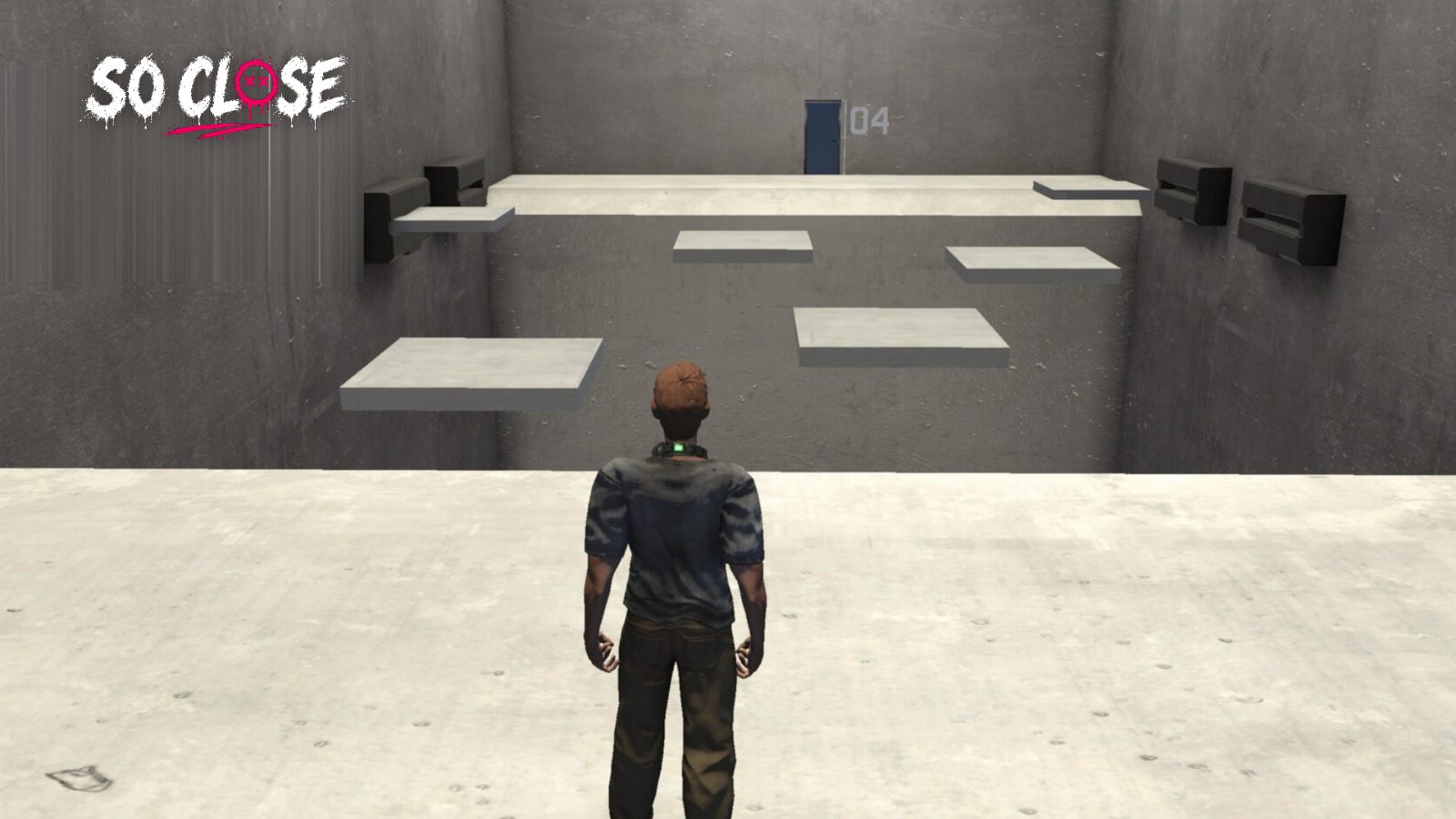
That shifts the whole level design: a jump a good player nails blindly becomes a problem the moment three others have to follow. Timing beats reflexes, communication beats skill.
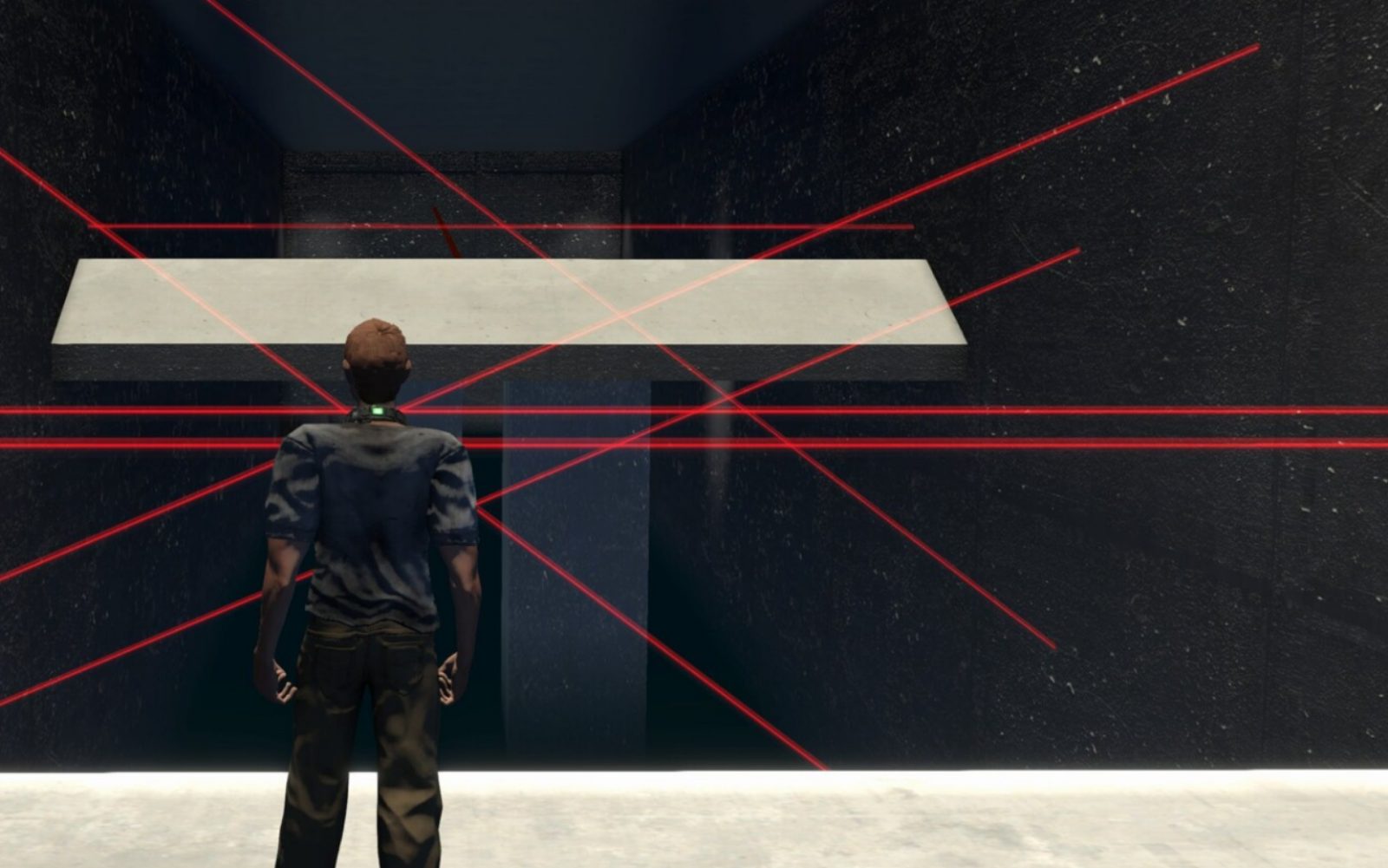
The rooms look tidy and harmless: platforms, doors, a few objects. That's the trick. Floors disappear, lasers switch on only once someone is underneath, objects move exactly when nobody is looking. No trap is random — each one is placed, and each one is learnable on the second attempt.
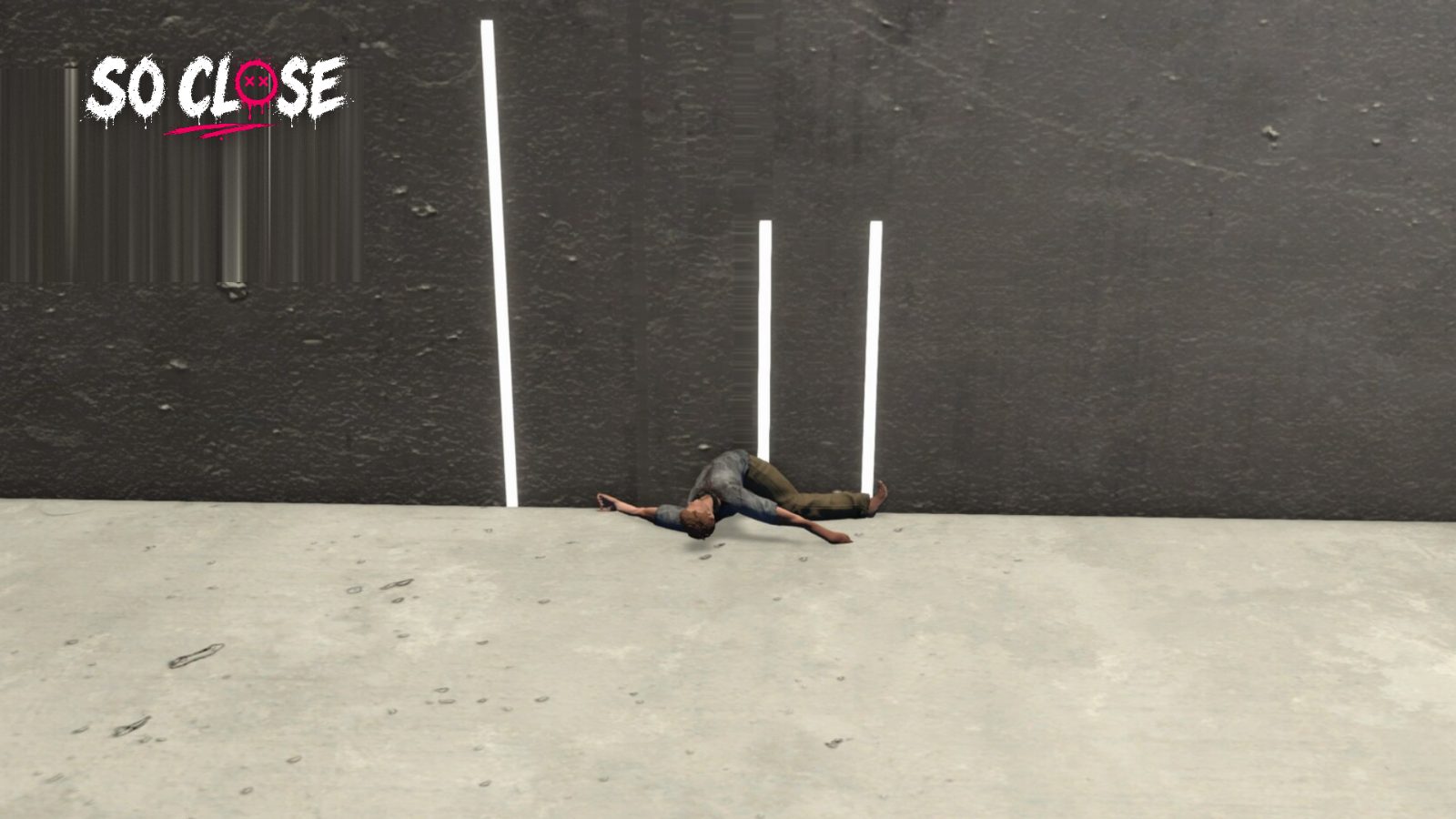
There is no individual failure. If one player dies, the run is over for the whole team. That produces exactly the mix of laughter and frustration SO CLOSE is built for — and the reason runs inevitably turn into speedruns: you repeat the same section until it sits.
From zero. Every time.
No checkpoints. When the team dies, everything restarts from zero. Pure ragebait — built for clips, streams and broken keyboards.
From the last checkpoint
Respawn at your last checkpoint and learn the traps section by section instead of starting over every single time.
After a few attempts SO CLOSE flips. Panicked dodging becomes a rehearsed sequence: who jumps first, who waits, where the team stands so the collar stays quiet. The best time is the real final boss — and the reason the same four people run it twenty times.
SO CLOSE is played in third person and supports controller as well as mouse and keyboard. One player hosts, the others join — online co-op for up to four players. Find teammates any time in our Discord.